Wednesday, February 07, 2007

Montreal Rant in G Minor

To the sexagenarian who keeps coming into my local supermarket and asking if they’ve found your debit card yet: It’s gone. You’re senescing. Welcome to the losing-stuff years. If there’s any money in your account, your bank will issue you a new card. If not, stay home. In any case, stop wasting everybody’s time.

To the guys who’ve been jackhammering and tearing up the road outside my apartment for the last 6 months, to no effect: I don’t hate you, I hate what you represent. A time in the future when my taxes will be paying for your deafening ineptitude.

To the student who texted me a militantly illiterate message demanding that I raise your grade: Fuck you. Your implication that a teacher of yours would have to be in any way spiteful to give you a shitty grade is comical. We all hit the wall sooner or later; for you, it’s junior college. Your essays are objective evidence that you are significantly dumber than those around you. Despite the monstrous stupidity running rampant at the average university, you will not even get in. Unless your parents are wealthy, you’re screwed.

To the glum Portuguese photographer who sits in the window of your little studio balefully watching the St. Laurent foot traffic pass your business by: I noticed you and, since I like to support the little guy, I made a mental note to get my passport photos done at your place. Imagine my shock when I found out you charge $13, while the big, nasty chain drugstore ½ block away charges $7. No matter how in focus and centered your passport photos are, I’m not going to frame them for posterity. I don’t know if you’re a thieving moron or a moronic thief, but I do know that you should be out of business. Bad luck to you and may you stub your toe in the darkroom.

To the e-Bay store that sold me Nike running shoes that turned out to be cheap fakes shipped to me in a cardboard box from China: Taste a black bear’s ass. Your site guaranteed authentic shoes, and included helpful tips for spotting fake Nikes. I see now that your positive feedback was typed exclusively by the right hands of 14 year-old boys who spend too much time in their rooms and have no need of arch support or a non-marking sole. I hope Phil Knight’s pocket calculator tells him that he can make more money by cracking down on you fraudsters and having the Chinese courts condemn you to suffer every prison movie cliché, except the escape.

To the retro and hipster shops on St. Laurent Boulevard: Stop amassing old junk from rummage sales and dumpsters and rebranding it retro chic by virtue of the fact that it’s in your store. Every time I look in I see the same badly scuffed vinyl records, dirty clothes and worn out kitchenware, watched over by the same tired hoydens with piercings. I’d have more respect for you if you just went ahead and sold vintage piles of dry and crumbling feces. If you’re not ready to lower your hypocrisy threshold to that level, at least take those melting records out of the window and invest in a mop and pail. Better yet, take out student loans, get an education and do something worthwhile.

To the Arabic market where I bought a bag of spices that turned out to be four years old: Inhale deeply from my cat’s litter box. I opened the bag just to confirm that the mixture would have the full aroma of North African desert sand. When you’re running a business, you have to take inventory periodically. When a product gets long in the tooth, mark it down, multiple times if necessary, but if nobody buys it you must accept the cruel logic of the free market and throw it away. Or I might know a few shops on St. Laurent who would take it off your hands, cheap.

Thursday, December 28, 2006

Things I Learned While Reading Student Essays

Man has created the society in which we live in.

In Sunshine Sketches people are scared of changes, more people, having scared to take up less part in the society.

We have not yet evolved but evolving for the worst, which one day will be man’s demise.

In this books, issues such as social ineptitude, ignorance towards other races, family structure and even general hygiene are found.

The comedy has been showed on many different aspects in the English Literature, nor not too many writers use dark themes to establish a parody out of it.

The comedy is showed in the contradiction between the ironic events and the dark themes in order to let the reader considerate the facts of life.

I bring up the fact that humans do have a choice to either live on fear and hate to live or live on love and love to live.

Coming from a mathematical background, Lewis Carroll knew exactly how to attract fresh new admirers.

This brings me to ponder the following question: should we base ourselves on poetry to define one’s beliefs?

Shakespeare’s poems were often written to lovers, but it isn’t known if they were his lovers or others’.

A village—it’s more old fashion then new technologies.

Also religion, church, school, family dinner in small community it’s real values, not in big cities just wokring to make a living or get rich.

When someone thinks of a prison, people think of a place filled with bad people. There are reasons behind the actions and why these people are called or referred too as bad. But no one is entirely good or bad all of the time. Everyone has committed a sin, which isn’t a good thing, but others do it more often.

In Annabel Lee’s case we understand she was killed by perhaps a natural disaster and had more of a today’s Hollywood feel to her.

William Shakespeare, William Wordsworth, and William Blake, three of the best poets that history has ever seen, strangely with their same names these three Williams have inspired many generations in a lot of there poems.

Love is a deep affection or fondness, it is a feeling of warm personal attachment to a person or to a living organism which occurs very slowly and softly.

Friday, December 22, 2006

Notes on Teachers
I’ve always thought the key statement about the futility of book learning to be the one in Plato’s Phaedrus. Plato has Socrates say that the invention of writing is unfortunate because a) Writing, unlike a teacher, doesn’t know when to be silent in the face of ignorance, and b) Students depend on writing to remember and so enfeeble their own minds. This is schoolmarm crankiness, but it also suggests a truth about the sad lot of the teacher: no longer the admired illiterate charlatan of a pre-Socratic sect, he becomes the custodian of an impersonal system of information retrieval. Knowledge is no longer magic, transformative of the knower, but a dry text about which we must be careful not to show too much contempt when the teacher is around. After all, he’d fail us if he knew what we really think of him. The conceptual gap between oral culture and cuneiform tablets is vaster than between cuneiform and iPod. As literates, we’ll never understand the perspective of an oral culture. We may as well try to think like a dolphin—or like Socrates. The anthropological and linguistic studies of oral cultures were merely self-referential works. Reading Homer is the closest we can come. And yet, even if we’re strong enough to disregard all spurious “traditions,” what we glean must necessarily be translated into our Gutenberg galaxy. Even Bill and Tedding back in time to hear Homer (who must have considered himself more teacher than entertainer) could not be more than an act of illiterate-tourism. As a humanities teacher, if I ask myself what one thing I would most like to teach my students, it would be hard not to express it as a didactic statement—and so not a “thing” but a “should.” You, the student, “should” make every effort to understand your direct and immediate relationship to culture, language, society and history, because if you do not, you will be enslaved effortlessly by the prevailing false systems of meaning. Something like that. Of course it would be unfair and outrageously self-indulgent to speak that way in a classroom. Besides, the argument has always lain open to criticism. Its most eloquent defense is also its shakiest: that such a belief has sustained multiple generations of secular humanists through centuries of brutal and psychotic Western history. Well then, the precocious student sighs with David Hume, why should future histories be anything like past histories? After all, my education is much more important than any bullshit mawkish theory of Western Civ.—this is my job prospects we’re talking about, etc. At any rate, that “lesson” is one that students must accept or reject for themselves after a long series of courses taught by like-minded teachers. We must accept that most post-secondary students will never face such favourable conditions. The other standard objection is that the teacher, as a demystifier and shareholder in Enlightenment Inc., must teach facts—verifiable things, not normative shoulds. So we have the text. The text is the prop in the teacher’s Keatonesque performance, to be taught and fallen all over by whatever exegetical blarney infects him. The student senses immediately that the answers—or even a molecule of truth—are not in the text. The correct answers are in the miserable dialectic of the teacher’s laboured questions, gestures, inflecting eyebrows, grinding teeth, carefully set shoulders (this is one reason why women, as superior readers of body language, perform better in Socratic environments). Pythagoras taught his followers that by imitating his motions, music and gestures, his students would gain insight into his mathematical doctrines and grow into priests of power. Today’s teacher offers a much more sad-sack model—that of a schoolteacher. The crushing systems of writing and information storage loom and lurk between him and his students. Even memorizing the text wouldn’t satisfy the teacher; he would still claim that you cheated and had failed to satisfy the unwritten criterion of proving that you’re not lazy…so why try? Anyway, it’s obvious he must have failed at something else even to be here—no wonder he hates you.

Sunday, November 26, 2006

From the Poland Files: Industrial Espionage, Part 2

Between dodge ball and insect safaris, we used to tell Polish jokes, Newfie jokes—without context, without malice. We thought that newfie or polack must mean contemptible and nothing else…What a polack thing to do! Most of these jokes had interchangeable butts. There was a bizarre one about Italian cowardice, a holdover from more categorical times that had cocooned itself in the playground gravel to rise again for post-boomers to hear and make of what we could. The Italian tank with five gears—all of them reverse. Madame Beauchamp’s eyes ballooned as she confiscated my sketch of it. I’d seen a tv special on the war and drawn Mussolini sitting on the hatch, ass-backwards with a bottle of wine, watching his contadini get crushed under the tread.

After nine o’clock you could hear the bad guys on tv use words like spick, kyke, polack, wop…monosyllables that held you in a mysterious, thrilling, gnostic power as the hero glowered back.

I never heard the Poles defamed again until I taught business English for Electrolux in Warsaw. Unlike FSO-Daewoo, their HQ were downtown. I could walk down my street, dodging citizens’ unneutered dogs, cross the hulking bridge spanning the intercity trains, and make it to their building by 8am. There was the usual security clearance charade in the lobby. English teachers were not important enough to be given passes, so every time I came I had to present myself and ask permission to be let in—which I always got. If you ever need to gain entrance to a building in a foreign capital, just tell them you’re an English teacher.

The fifteenth floor was pure 80’s power office, all sleek blues and greys, needlefelt carpeting, roaming coffee trolleys and everyone smoking ha-ha-ha round the cooler. On the walls were framed vintage Electrolux ads to provide them with metanarrative. The 50’s housewife in full skirt grinning at her two-tone appliances. Pumps, outboard motors, luxomatic push-button vacuums sweeping up decades of dust: Nothing Sucks Like Electrolux. A man’s professional phone-voice boomed out in decent American English: “They have bought 12,000 H45-K’s…they will sell six! They have no idea what is going on. I told them to stop the lying. I said ‘Stop lying and pretending you understand what your job is and then I can start telling you what you're here for. Once we know that, we'll get back to selling because this is a business for the sake of Jesus!”

The accent, definitely not Polish, was hard to place. His voice trailed off as I got further away. The boardroom had a beech oval table and flipboard. I sat in a leather executive chair and reviewed my lesson. Verbs of motion: come, go, leave, arrive. To, in, at, towards. To is a preposition, come is a verb. Repeat after me: "To! Come!" I waited but no one came. A woman poked her head in the door, saw me, inhaled sharply and retreated. I was glad about not having to go through with another miserable grammar lesson, but then again I didn’t know what to do. Petty thoughts passed through my mind. Should I call my school? How long did I have to stay before leaving? Was I going to get paid? At last I packed up and headed for the elevator. On the way, passing the same office, I looked in and our eyes met. He was a heavyset blond man in a slate grey suit. When he saw me in my jeans, oversized shirt and long hair, he didn’t know what to make of me.

“And you are…?” he asked, as if addressing an invasive species.

“I’m the new English teacher,” I said. “I…my class was supposed to be in room 1501.” He cocked his head. “But there must’ve been a mix-up because nobody...came.” He shot a black look at his desk. Lifting his finger to keep me waiting, he called up underlings to report later for a bollocking. Smiling, he invited me into his office.

“You are an American?”

“Canadian, actually.”

Wistfully: “Ah…Canada. Beautiful country.”

“Oh, you’ve been?”

“No. Cancelled several fishing trips, though. Cigarette?” He flipped open a cedar box full of those Pure Virginia brown-paper cigarettes you pass by at duty-free shops. I took one and so did he. It was so strong I smoked it like a cigar until I left it to burn out in his crystal ashtray.

“I must apologize for my employees not turning up,” he told me. “Perhaps you’ve been here long enough already to know how hard it is to motivate them.”

“Well, this is my first day here….”

He smiled benignly. “No, please, what need you to cover up for them? There are historical circumstances, I would not deny it. But as we say in Sweden, history cuts both ways. You’re free to complain about outsiders coming to partition your country over and over…but what does this say about you that you keep getting partitioned, eh?” I told him I didn’t know. He laughed, his cufflinks shaking.

“I admire you but I don’t envy you,” he said. “A teacher in this country. And the stage is set for success, and the Polack needs English to connect with the rest of the civilized world, and here you are, ready to give it to him for practically nothing.” I laughed nervously. He swivelled in his chair to look down on the city.

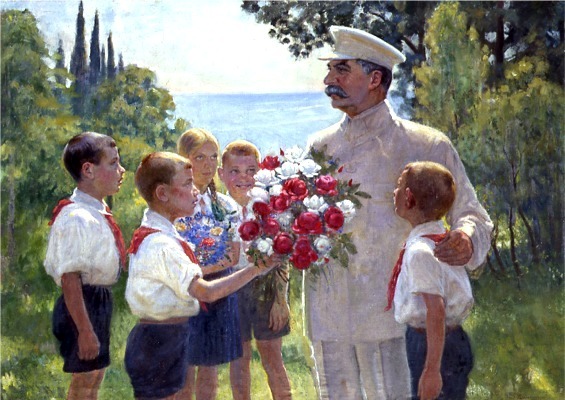
“Polacks. Lazy. Drunks. Idiots. Stalin was a thug but he said out loud what otherwise can only be said in children’s games.” He swivelled back to me and stood to see me to the door. His bad mood was gone. “Nice to have met you. Hmm…Canadian. Fish?”

“Sorry?”

“Do you fish?”

“Not really.”

“That’s too bad.” He looked me up and down. “Well, you won’t find it so bad here. The Polish girls are very Catholic—they’ll do whatever you want. Time goes by fast, enjoy yourself. Easier to teach English than the Protestant work ethic!”
Monday, November 20, 2006

From the Poland Files: Industrial Espionage, English Style

Wup-wup-wup-wup-wup-wup-shhhh…wup-wup-wup-shhhhhhhh… wup-wup-wup-wup-wup-shhhhhhhhhhhh. Instead of accelerating, the trams in Warsaw shake and worble up the tracks until some negative feedback is tripped and shooshing hydraulic stabilizers kick in: shhhhhh. The no. 23 crossed the Vistula and lesser rivers on its way north. It was crowded, but I could get a seat somewhere between the Russian market and the shacktowns where they grew their own cabbages and beets. A Platonic female voice, a slavicized Star Trek computer, would call out the stops overcorrectly, emphasizing the nasal vowels as if there were a government white paper pronouncing them endangered. I formed the sounds of the stops with my lips, trying not to think about what I had to do.

The ex-pat asylum that gave me a bed and beer money made me pay my way teaching business English. This meant they billed out at 300 zloty per 50-minute hour for sending out, via subsidized public transportation, a snivelling, underqualified cipher whose task it was to impersonate a teacher. The cipher was paid 30 zloty and handed a photocopied map of how to reach the kiosk selling the cheapest tram tickets.

Within this system, the newest ciphers got the in-company teaching gigs noone else wanted. So picture me on the no. 23 tram wup-wup-wupping northwards past the six-by-six beet gardens and potato vodka bottle glass and pasturage and lives too badly shitfucked by faux-Marxism to ever get anything out of the free market…rattling north on rusty rails to the low-rent moonscape where FSO-Daewoo swooped down, sank in its talons, saw that it was good, and said: “Here. Never mind the cow patties. Here we shall general our way into the Polish market."

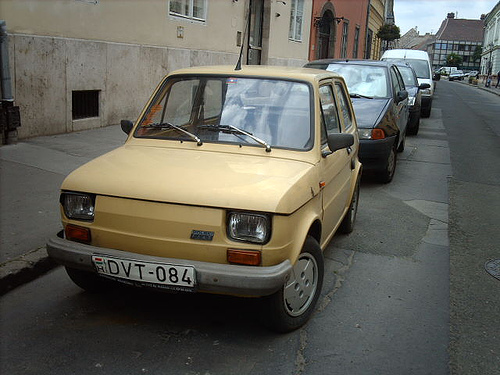
Vital facts: FSO was the Polish government-controlled car-tel with the catchy, monopolist-smug social-realist name: Frabryka Samochodów Osobowych, or People’s Car Manufacturing Company. Daewoo was a Korean electronics and automotive zaibatsu that Enronned out of existence in 2000. But for a few brief years, these two companies—one with no hope of competing in the free market, the other living from audit to audit—refused to die the death and siamesed into a producer of cars whose size and quality were in the range between subcompacts and Hot Wheels.

One of the more manageable problems of the merger was communication. The Polish engineers and salespeople weren’t going to pick up Korean on their breaks, so I was going to come twice a week and teach them Anglo-Saxon. The tram shuddered to a stop to let me and only me off at a stop named Zakłady Mięsne. With my limited Polish, this seemed to—and still seems to—mean Meat Factories. Aside from the FSO-Daewoo plant, it was Childe Roland territory out there: stunted shrubs and tracts of gravelly mud about to freeze into protoplasmic lumps. I shuffled over the parking lot to security to present my letters of introduction. A guard with a ruined nose accepted them like a signed confession. His heavy fingers were slow to dial on what must have been his first touch-tone phone. He waved over his shoulder for me to sit down. Eventually, a grinning blond engineer called Mirek came to fetch me.

“You are English man?”

“Well…yes.”

“You come.”

He showed me a few open-concept detail units and desultory shop floors on the way to the classroom. It was like watching them on 16mm film. They reminded of the Flint, Michigan of Roger and Me.

For lack of anything else to say: “So what do you work on, Mirek?”

“I develop a car that run on butter.”

“Excuse me?”

“Is our goal to make this car by five years.”

A moustache wearing a tall man passed us in the hall, slapping its hard hat in recognition of Mirek, who said nothing.

What kind of car?” I asked.

“Butter power. No more gasolines. In futurity, everything running on butters.”

“You mean batteries.”

“Yes, buttery. I very like buttery.” We walked some more. “You know, our cars are most quiet in the World.”

“Oh. I didn’t know that.”

“No, no, you ask why.”

“Why what?”

“Why are most quietest.”

“Why are your cars the quietest?”

“Because…your knees covering your ears!” He dissolved into a little fit of nitrous oxide.

We were approaching raised voices. In a drafting room a Pole and Korean were arguing in broken English over a schematic diagram of an engine. They beckoned me in.

“You are…English man?” one of them asked.

“Um…yes.”

The Pole smiled triumphantly as he placed one hand on my shoulder. With the other, he pointed expertly with his index fingernail to an infinitesimal gizmo in the deepest bowels of the engine. “Then you will please to tell my friend…what is that!” I bent over the diagram—drafting pencil on transparent paper. I could think of no way even to describe the shape of the part or how many sides it had or what it might do; it was no less complex than I imagined an entire engine to be. One of those little Maxwellian demons who lurks in the heart of the machine, enforcing the laws of physics.

When I looked up, the two engineers were watching me, hopefully, nervously, waiting for me to settle their argument. Mirek had disappeared without my noticing. I could hear the buzzing fluorescent lights. They didn’t know what I knew, so they couldn’t say what they did. I didn’t know what they knew, so I couldn’t do anything at all.

* TO BE CONTINUED *